
Building controls in Rhode Island commercial facilities reduce energy consumption by centralizing HVAC, lighting, and occupancy data into a single Building Automation System (BAS). The Rhode Island Office of Energy Resources offers a Building Automation Systems Accelerator program, providing technical assistance and financial incentives to state agencies for upgrading or installing HVAC controls.

Key Takeaways

  • The Rhode Island Office of Energy Resources launched a Building Automation Systems Accelerator to upgrade HVAC controls across state agency facilities.

  • Legacy pneumatic and standalone control systems cannot satisfy Chapter 13 of the Rhode Island Building Code 2021 minimum design requirements.

  • Facilities without centralized automation lose thousands of dollars annually to equipment runtime that serves no occupancy need.

  • A centralized building automation system integrates HVAC, lighting, and energy meters into a single monitoring interface for facility managers.

Why upgrade building controls in Rhode Island?

Rhode Island facility owners face a tightening intersection of regulatory mandates and operational cost pressures. The state’s building automation and controls Rhode Island landscape now includes direct financial incentives for modernization, while outdated control systems silently drain operating budgets through undetected inefficiencies. The Rhode Island Office of Energy Resources launched its Building Automation Systems Accelerator to upgrade HVAC controls across state agency facilities. The program delivers technical assistance, procurement support, implementation oversight, and financial incentives. Many buildings receive automation for the first time through this initiative. The Accelerator targets immediate and significant energy cost reductions while shrinking public sector carbon footprints, aligning directly with the 2021 Act on Climate legislation.

Rhode Island’s regulatory framework reinforces the urgency. Chapter 13 of the Rhode Island Building Code 2021 establishes minimum design requirements for efficient energy utilization. The code specifically addresses HVAC equipment selection, lighting controls, and the building thermal envelope. Legacy pneumatic and standalone control systems cannot satisfy these modern code requirements. They also fail to deliver the operational data that facility managers need for continuous optimization.

What happens when building controls remain outdated?

Legacy systems operate on fixed schedules rather than real-time conditions. Equipment runs during unoccupied hours. Maintenance teams respond to complaints instead of system alerts. Utility costs climb without corresponding occupant benefit. A centralized building automation and controls RI platform integrates HVAC, lighting, and energy meters into a single monitoring interface. Facility managers gain visibility into every kilowatt-hour consumed and every hour of equipment runtime.

How do Rhode Island incentive programs reduce upgrade costs?
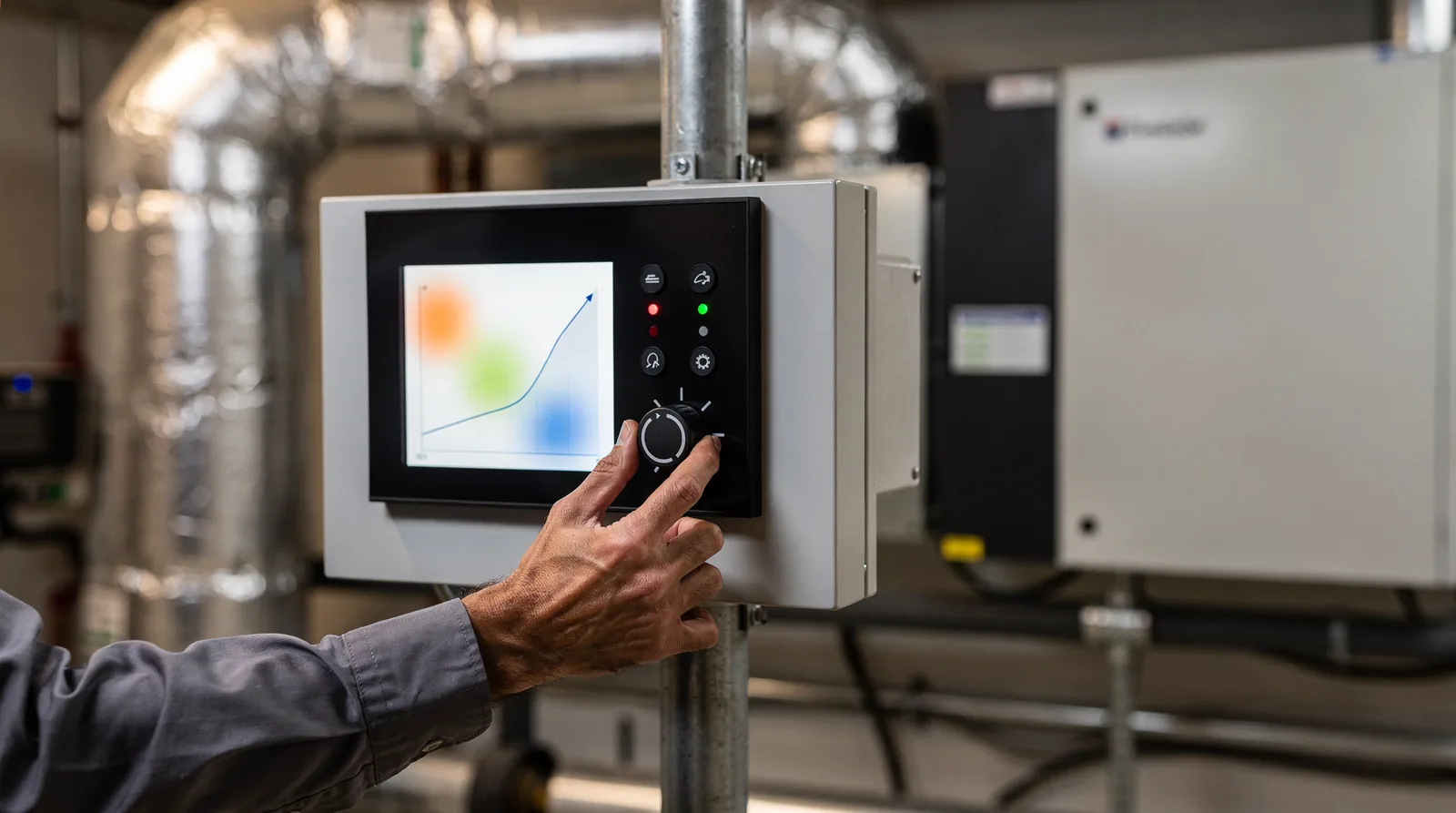
The Building Automation Systems Accelerator removes financial barriers that historically delayed control system modernization. State agencies receive procurement guidance and implementation support alongside direct incentives. The program structure acknowledges that first-time automation installations deliver the fastest payback. Facilities that already operate partial systems benefit from expanded integration and upgraded sequences of operation. A complete guide to building automation details how sensors, controllers, and software dashboards enable real-time energy management across Rhode Island commercial buildings.

Earthwise Energy Technologies provides building controls Providence RI engineering services that align with both the Accelerator’s technical requirements and Chapter 13 code compliance. The company’s design-build approach ensures that upgraded systems deliver measured energy savings rather than theoretical projections.

What is a building automation system?

A building automation system (BAS) is a centralized platform that integrates a facility’s critical mechanical and electrical equipment. It enables real-time monitoring, control, and optimization of performance across an entire property. Without this integration, facility managers in Rhode Island lose the ability to see how HVAC, lighting, and energy meters interact. That blind spot drives up utility costs and shortens equipment life.

A BAS connects disparate building systems that otherwise operate in isolation. Modern commercial buildings generate enormous data streams from HVAC systems, lighting controls, occupancy sensors, and energy meters. A centralized system pulls that information together. Facility managers gain a single interface for making adjustments, identifying faults, and tracking energy consumption patterns.

What components make up a building automation system?

Core components include sensors, controllers, and user interfaces. Sensors collect real-time data on temperature, occupancy, humidity, and energy use. Controllers process that data and execute commands to adjust equipment operation. User interfaces give facility teams a dashboard for monitoring trends and overriding settings when needed. These elements work together to automate routine tasks that manual management cannot handle efficiently.

Who provides building automation and controls in Rhode Island?
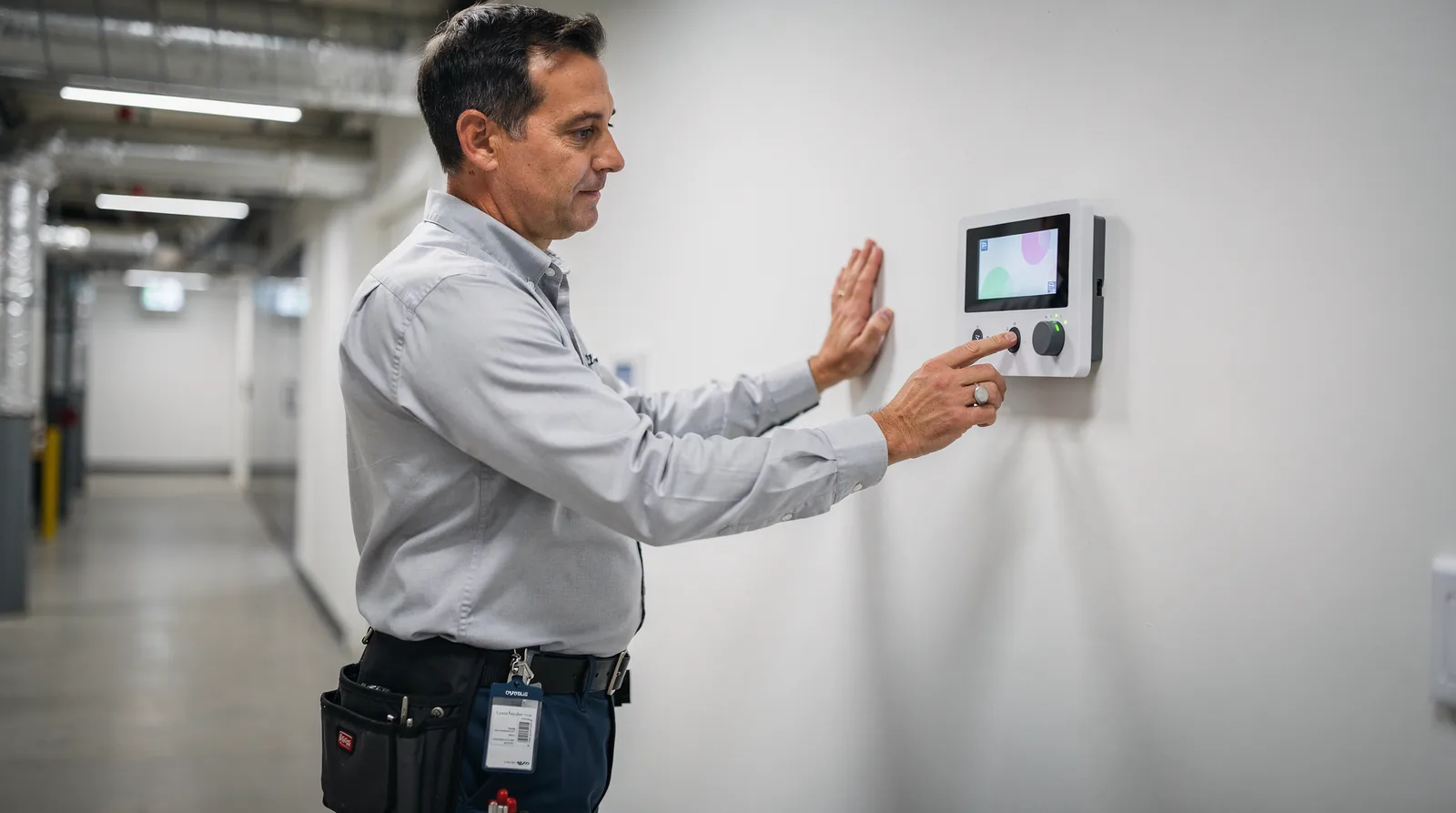
Earthwise Energy Technologies serves as an authorized building and controls specialist for Johnson Controls and Honeywell Niagara Tridium 4 across Rhode Island. The company designs and implements building automation and controls Rhode Island facilities rely on for energy performance and occupant comfort. Its engineering team handles everything from initial system architecture to ongoing maintenance. For a deeper look at how these systems transform facility operations, explore the company’s overview of building automation systems for Rhode Island facilities.

Building controls Providence RI property owners deploy through these platforms deliver immediate operational visibility. Building controls RI teams install connect lighting schedules, HVAC setpoints, and demand-based ventilation into one coordinated sequence. The result is a building that responds to actual conditions rather than fixed timers. Building automation and controls RI projects typically start with an assessment of existing equipment and control protocols to determine the right integration strategy.

How do building controls cut energy costs?

Building controls RI slash energy expenses by automating HVAC schedules, setpoints, and economizer operation to match real-time occupancy and outdoor conditions. Facilities without centralized automation waste thousands of dollars annually through unnecessary heating, cooling, and equipment runtime.

The financial drain compounds quickly. Equipment runs during unoccupied hours. Setpoints drift from optimal ranges. Maintenance teams chase breakdowns instead of preventing them. A building automation and controls Rhode Island system eliminates these losses through three primary mechanisms.

How does automated scheduling reduce utility bills?

Scheduling aligns equipment operation with actual building use. Sensors detect occupancy and adjust temperatures accordingly, preventing HVAC systems from conditioning empty spaces. The Rhode Island Office of Energy Resources, through its Building Automation Systems Accelerator, provides technical assistance and financial incentives to state agencies adopting these controls. The program targets immediate and significant energy cost reductions across public facilities.

What role does predictive maintenance play in cost control?

Predictive maintenance transforms equipment management from reactive to proactive. Continuous system monitoring identifies performance degradation before failures occur. This approach extends equipment lifespan and reduces unplanned downtime. Facility managers avoid emergency repair premiums and premature capital replacements. The result is lower long-term ownership costs and more predictable operating budgets.

  • Demand-controlled ventilation adjusts outdoor air intake based on CO2 levels rather than fixed schedules

  • Optimal start/stop algorithms calculate precisely when to begin heating or cooling to reach setpoints by occupancy time

  • Economizer controls leverage cool outdoor air for free cooling when conditions permit

Rhode Island businesses can offset implementation costs through the Small Business Energy Efficiency Grant Program, which previously offered reimbursement for measures identified in an energy audit. The program is currently closed to new applicants, but facility owners should monitor Rhode Island Commerce for future funding rounds. The combination of utility savings and grant funding accelerates payback periods substantially.

Can building controls improve comfort while cutting costs?
Efficient operation and occupant comfort reinforce each other rather than competing. Building automation and controls RI systems maintain tighter temperature and humidity tolerances than manual adjustments ever achieve. Consistent conditions reduce hot and cold calls, freeing maintenance staff for higher-value work. The primary goal remains delivering occupant comfort alongside measurable reductions in operating cost.

What RI incentives support BAS upgrades?

Rhode Island offers multiple financial and technical incentives for building automation and controls Rhode Island upgrades. Facility owners who delay these projects forfeit reimbursements worth tens of thousands of dollars.

The Building Automation Systems Accelerator, run by the Rhode Island Office of Energy Resources, provides technical assistance, procurement support, and implementation oversight to state agencies. The program also delivers financial incentives that accelerate adoption of building automation systems. Building Automation Systems deliver immediate energy cost reductions and shrink public sector footprints, aligning with the 2021 Act on Climate legislation.

What does the Building Automation Systems Accelerator cover?

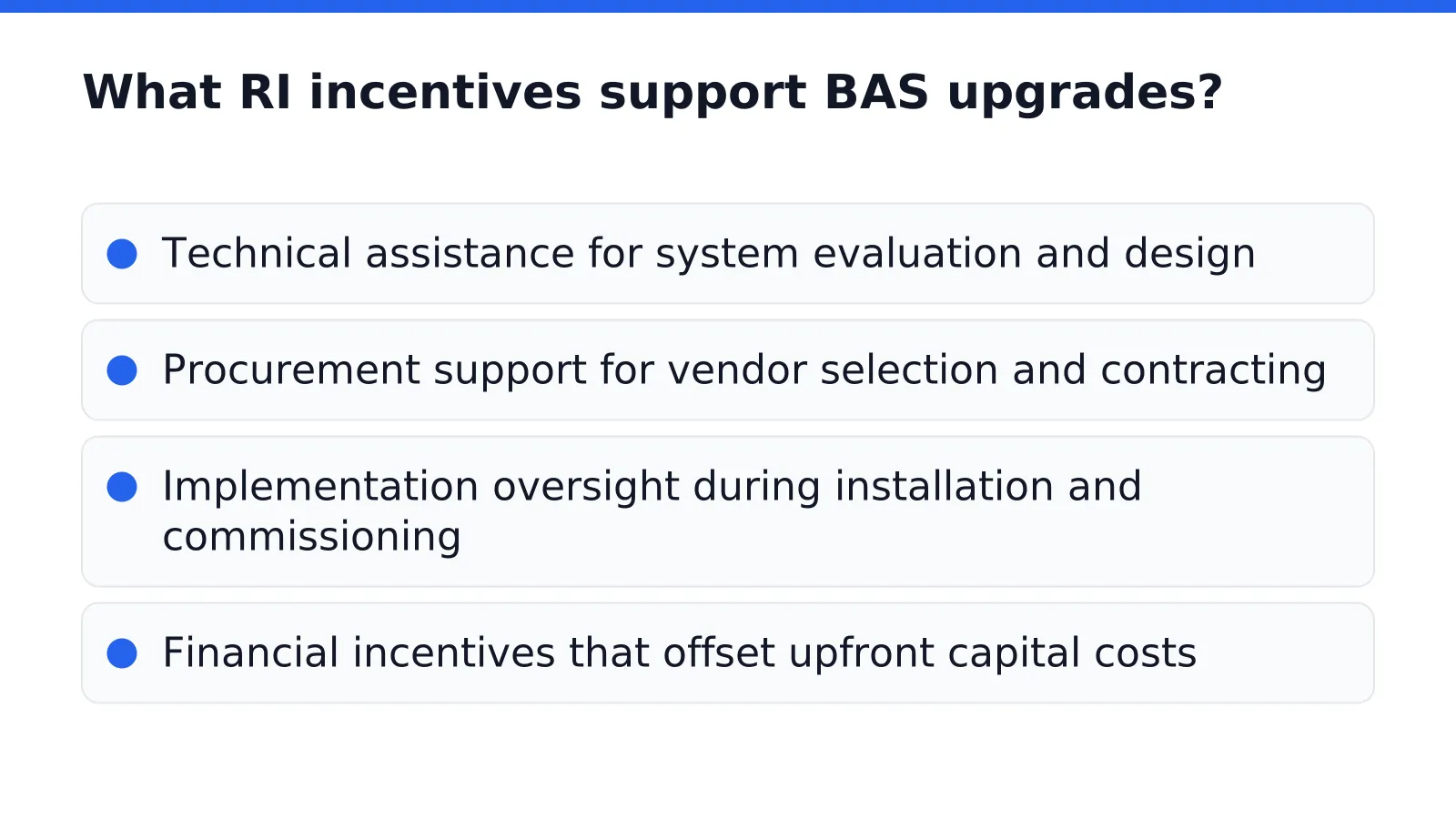
The Accelerator supports state agencies through four service areas:

  • Technical assistance for system evaluation and design

  • Procurement support for vendor selection and contracting

  • Implementation oversight during installation and commissioning

  • Financial incentives that offset upfront capital costs

How much can small businesses recover for building controls RI?

The Rhode Island Commerce Small Business Energy Efficiency Grant Program covers up to 80% of project costs for businesses with less than $2 million in annual gross revenue. Qualifying companies receive reimbursement for energy efficiency measures identified through an energy audit. The program closed to new applicants, but facility owners should monitor Rhode Island Commerce for future funding rounds.

Who handles building controls Providence RI implementation?

Earthwise Energy Technologies provides design-build capabilities, testing and balancing, and maintenance programs for commercial clients. The company’s engineering team supports building automation and controls RI projects from initial design through long-term system training. Facility managers gain a single accountable partner for the entire BAS lifecycle.

How to choose a controls partner in RI?

Selecting a building automation and controls Rhode Island partner demands scrutiny of technical depth and local market tenure. The wrong choice leaves facility owners with orphaned systems, escalating energy waste, and no path to continuous optimization. A qualified firm brings engineering rigor, integration capability, and a documented track record across New England commercial facilities.

What experience should a Rhode Island controls partner have?

Longevity in the regional market signals reliability. Earthwise Energy Technologies has been implementing building automation controls for many years, serving contractors and facility managers throughout New England. The company originated from its sister company, Arden Engineering Constructors, and both operate under Arden Building Companies, one of the largest mechanical and HVAC construction and service organizations in the region. This affiliation provides clients with deep engineering resources and multi-trade coordination rarely found in standalone controls vendors.

What technical capabilities matter most?

A qualified partner integrates legacy equipment with new systems on a single, accessible platform. Earthwise Energy Technologies designs automation control systems that facility managers monitor and adjust from anywhere, at any time. The scope must include ongoing monitoring and continuous commissioning, not just initial installation. Without these capabilities, buildings drift from optimal performance within months of startup.

Key selection criteria:

  • Regional experience: Multi-year presence across Rhode Island commercial and industrial facilities

  • Engineering depth: In-house design capability, not subcontracting to third parties

  • Integration range: Proven ability to unify HVAC, lighting, and metering across mixed-age equipment

  • Ongoing support: Monitoring and commissioning services that prevent performance decay

A partner’s structural backing also matters. Earthwise Energy Technologies operates as part of a larger mechanical and HVAC construction group, giving Rhode Island clients access to broader technical support than a boutique firm can offer. Facility managers evaluating building controls Providence RI providers should verify this organizational depth directly.

FAQ

What building controls incentives does Rhode Island offer?

The Rhode Island Office of Energy Resources launched a Building Automation Systems Accelerator program. It provides technical assistance, procurement support, implementation oversight, and financial incentives to state agencies.

Why do outdated building controls waste money?

Outdated building controls waste money by operating on fixed schedules rather than responding to real-time occupancy and conditions. Equipment runs during unoccupied hours, setpoints drift from optimal ranges, and maintenance teams respond to complaints instead of system alerts. These inefficiencies drive up utility costs without providing any occupant benefit.

What does a centralized building automation system integrate?

A centralized building automation system integrates HVAC, lighting, and energy meters into a single monitoring interface. This gives facility managers visibility into every kilowatt-hour consumed and every hour of equipment runtime.

Conclusion

Commercial facility owners in Rhode Island who delay building automation upgrades forfeit both the financial incentives and the operational savings those programs support. A qualified controls partner with regional experience and in-house engineering depth delivers tighter temperature tolerances, reduced maintenance calls, and measurable energy cost reductions. The decision to modernize building controls transforms a facility’s operating profile while aligning with state energy goals.